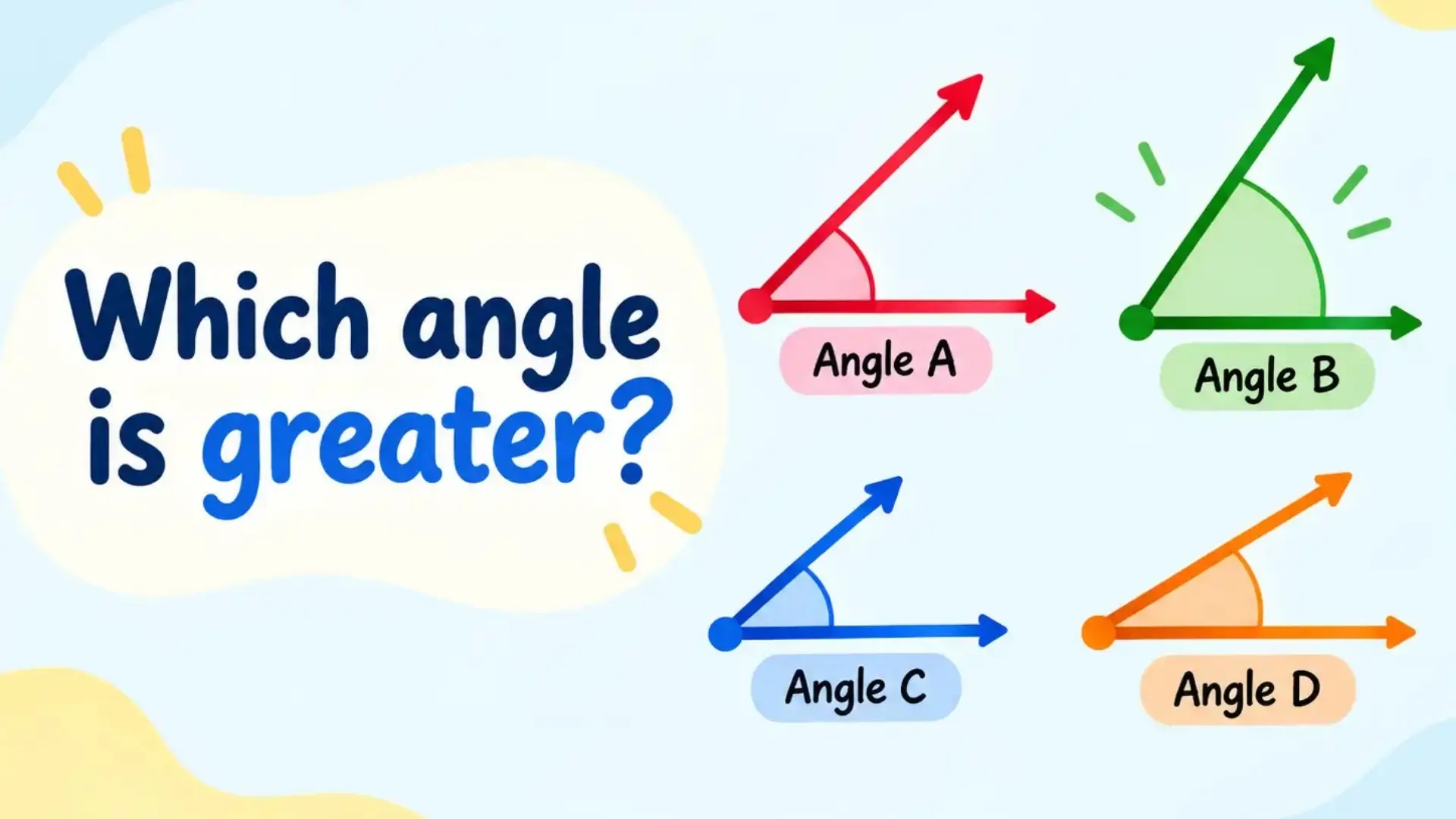

We need to compare angles when we need to know if the angles being compared are equal, which is the greatest among them, which is the smallest among them, maybe we need to arrange them in ascending order or descending order according to the value that they have.
Practically, suppose you would like a solar panel to be installed at your home, so you will need to compare with respect to horizontal ground, at which angle of tilt, sunlight received will be greatest.
Another example for needing to compare angles could be while installing a satellite dish, the system of satellite dish installed continuously compares the angle of the dish with the angle of the satellite to make sure they are pointing exactly at each other so that the connection is good.
So, practically, comparing angles helps us compare direction, turning, opening, and steepness.
Table of Contents
Methods for comparing angles
Angles can be compared by different methods:
1. By Observation
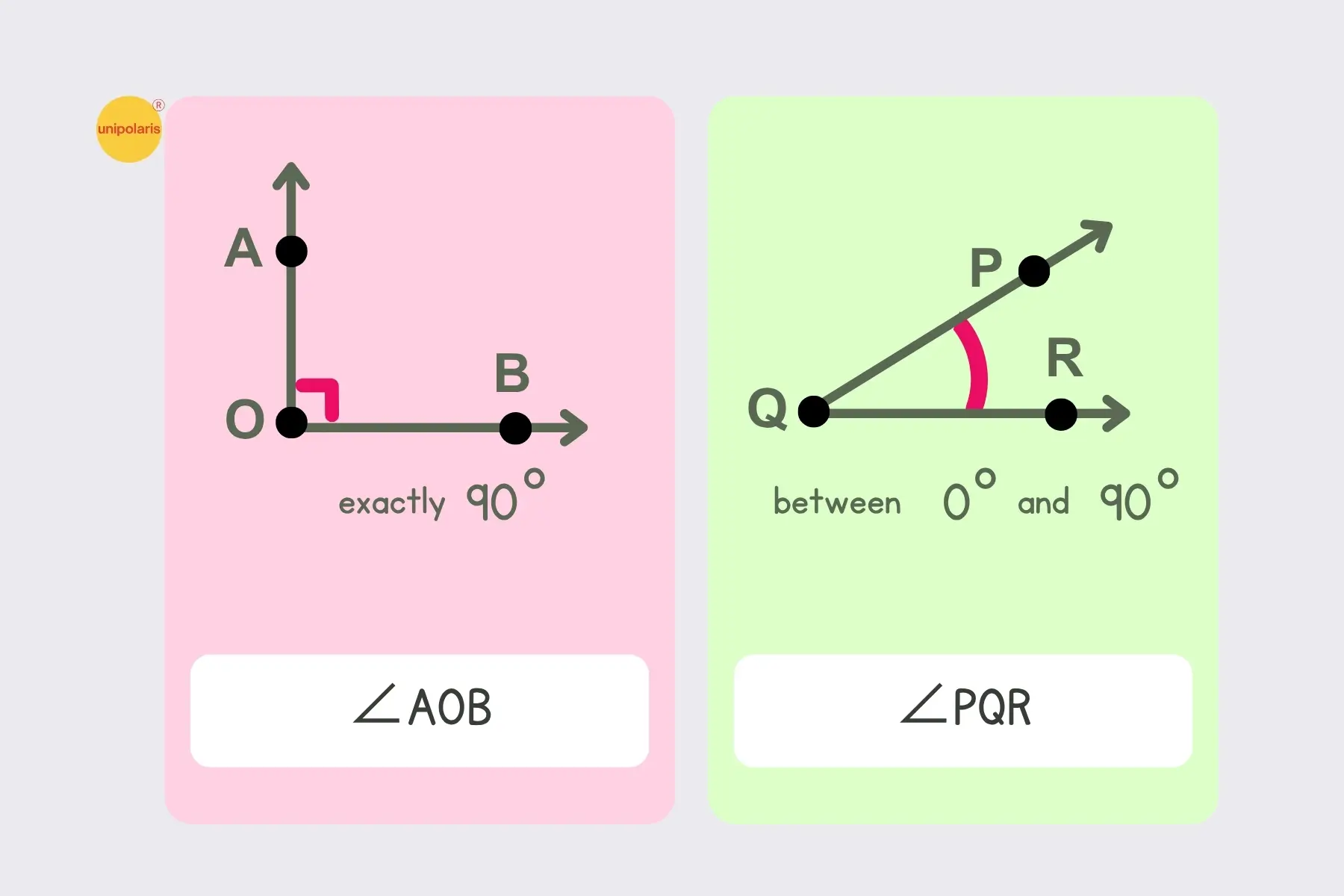
By observation, we mean by sight, we can tell which angle is greater and which angle is smaller.
In below image, we can see that angle AOB is greater than angle PQR
2. By Superimposition Method
The word superimposition simply means placing one thing over another such that both things are still visible.
Let us understand it with reference to comparison of angles.
In superimposition method, we trace one of the angle on tracing paper and then place the traced copy on another angle such that vertices of both angles overlap and one arm also overlaps on one another.
Suppose we have two angles, ∠ABC and ∠DEF
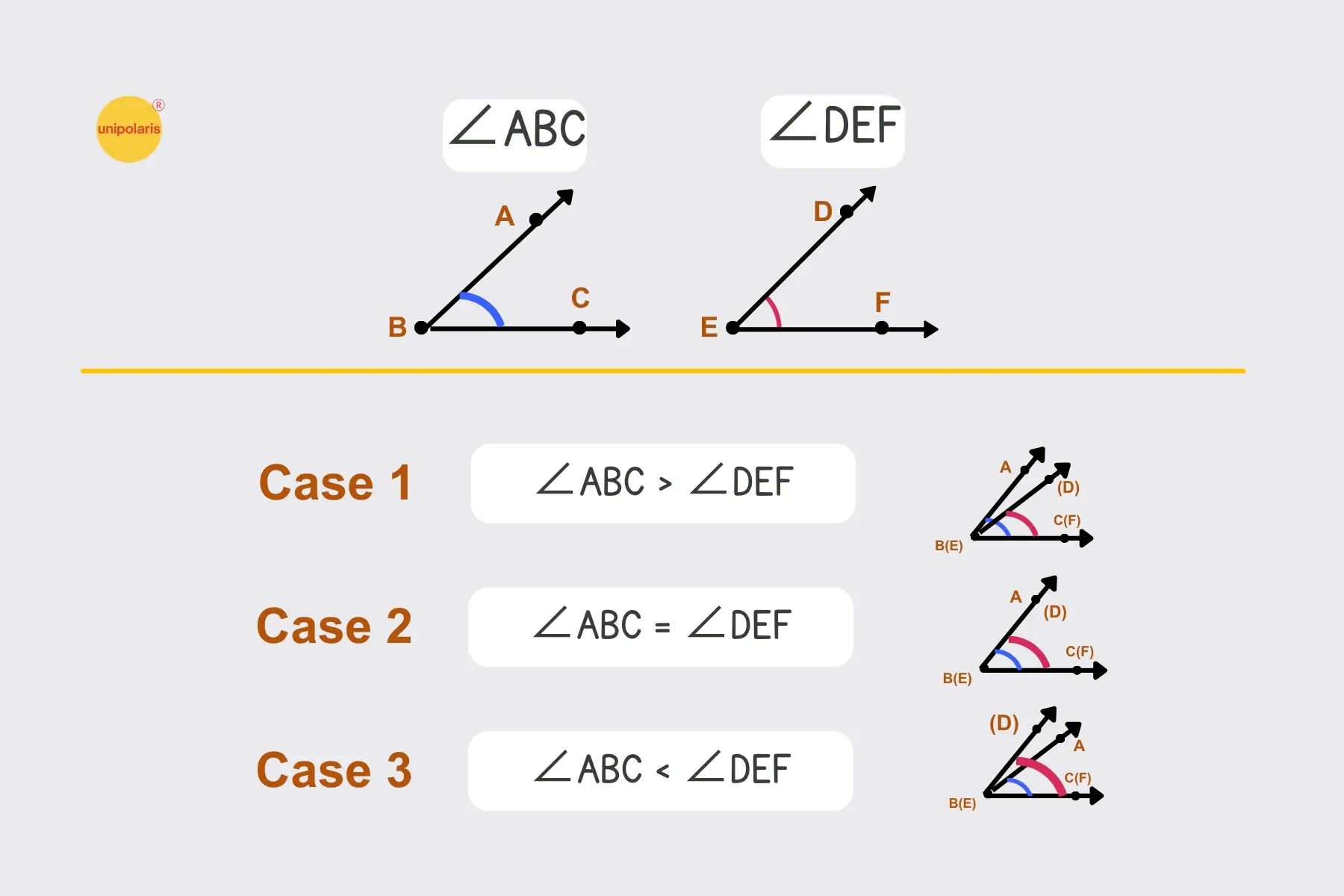
In the above image, the superimposition method is applied by placing vertex B on E and ray
on
.
Three cases are possible:
∠ABC > ∠DEF when more rotation is required to move ray
to
as compared to moving ray
to
.
∠ABC = ∠DEF when ray
coincides with ray
.
∠ABC < ∠DEF when less rotation is required to move ray
to
as compared to moving ray
to
.
3. Without Superimposition Method
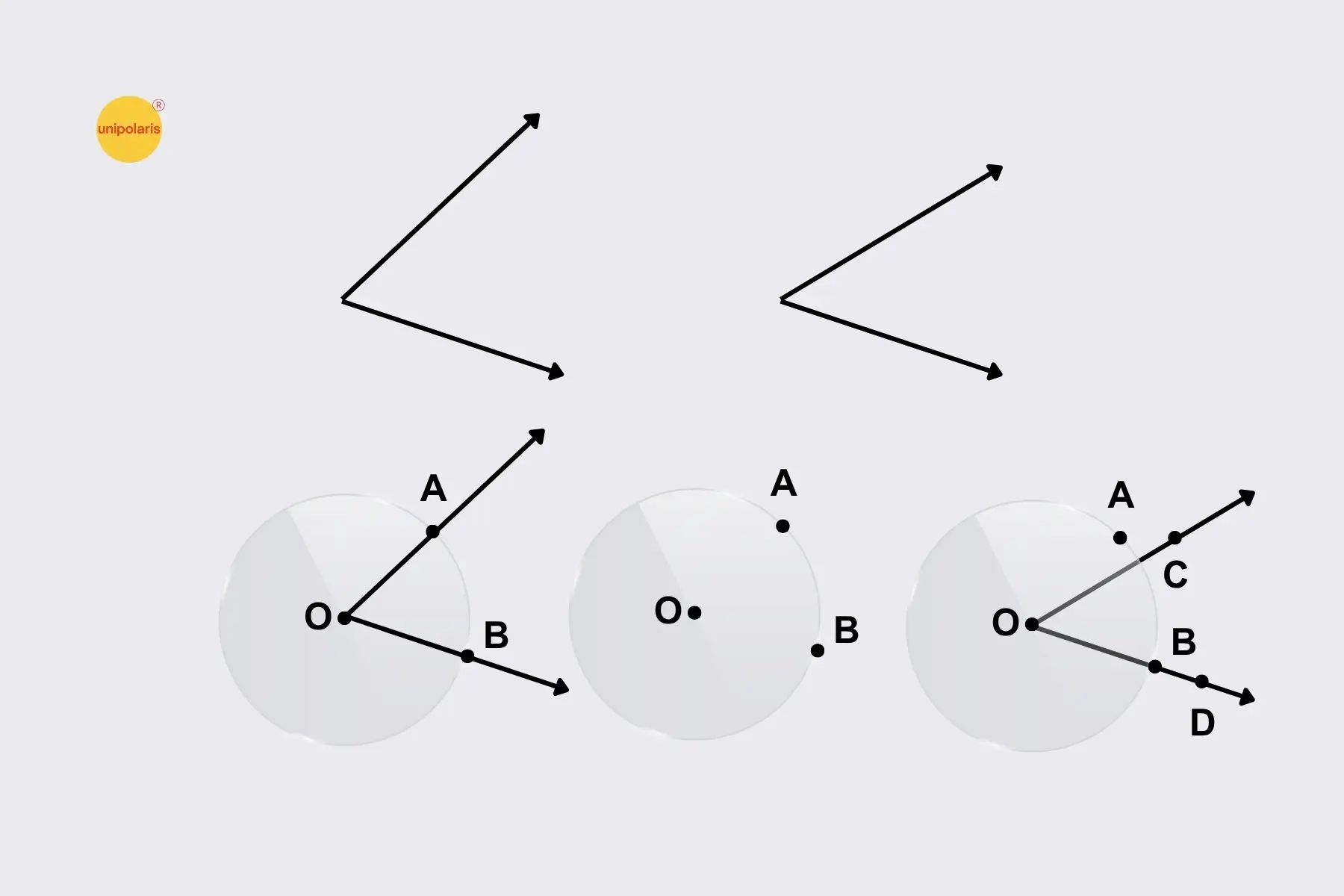
Using a transparent circle which can be moved and placed on figures we can compare angles without superimposition method.
Let us explore how.
In the image below, we have to compare given two angles made by two figures
For this, we take the transparent circle and keep it on first figure angle such that centre of circle is on the vertex of the angle. Here centre of circle and vertex is denoted by O
Mark the points A and B on circle such that arms of the angle pass through the circle
Now, the transparent circle is placed on second figure angle such that vertex of angle and centre of circle coincide and one of arms passes through OB.
We can see that first figure angle is greater than second figure angle.
A Hands on Activity
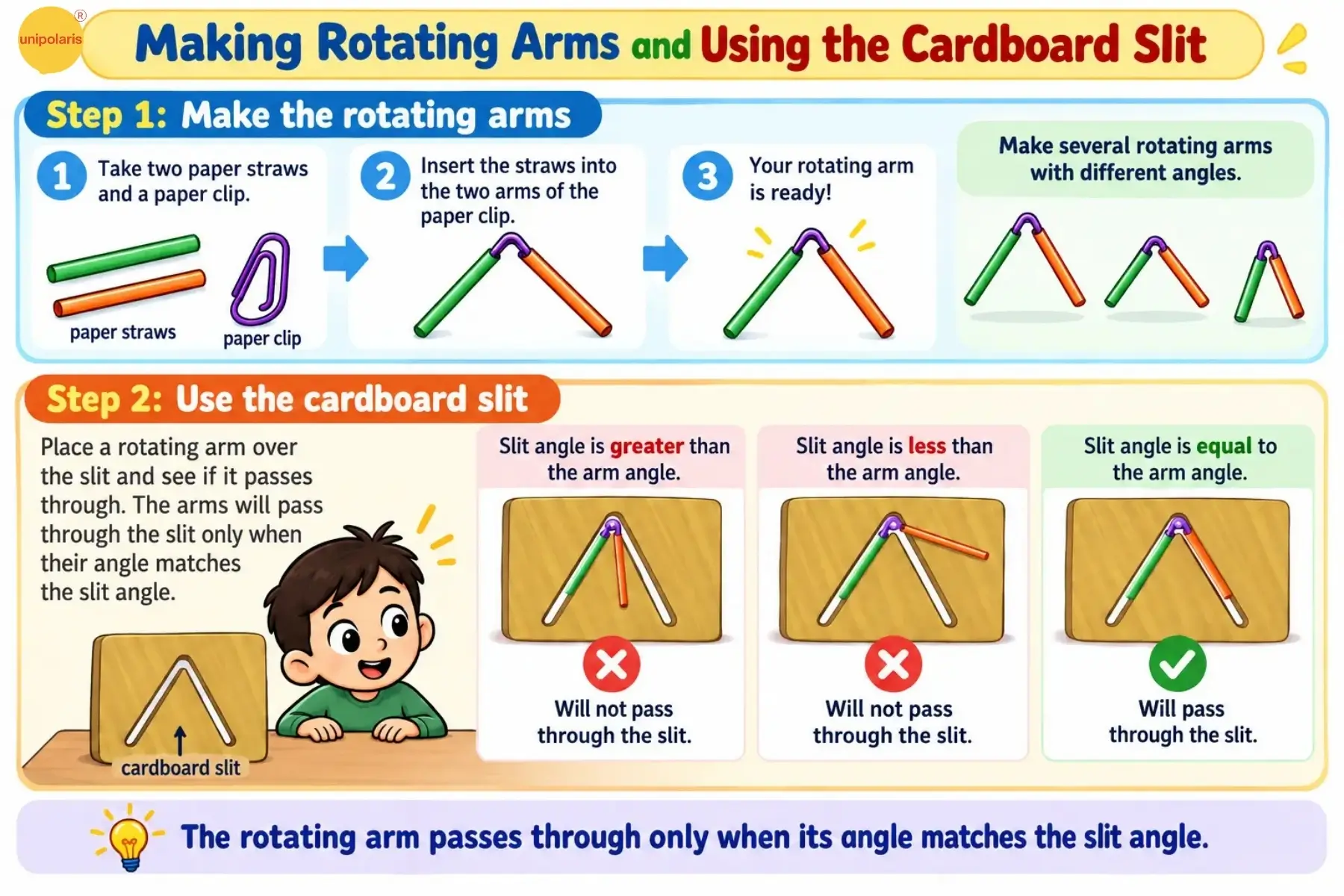
Let us perform the following activity to practically understand comparing angles by making a rotating arm:
Two straws and a paper clip are taken and both straws are inserted into arms of paper clip.
The rotating arms are ready.
Make many ‘rotating arms’ with different angles between the
arms and arrange the angles you have made from smallest to largest by
comparing and using superimposition. This helps you practically understand to identify difference in angle sizes
Then, take a cardboard and make an angle-shaped slit by tracing and cutting out the shape of one of the rotating arms. Then shuffle the rotating arms and try to identify which rotating arm will pass through the slit. The correct rotating arm can be found by placing each of the rotating arms over the slit.
We observe that the rotating arm where the angle is equal to that of the slit passes through the slit.
Also the possibility of passing through the slit depends only on the angle between the rotating arms and not on their lengths as long as the arms are shorter than the length of the slit.