

Table of Contents – What is education?
Introduction
What is education? Why to get educated? How to get educated? Is education just textbooks and classrooms, or something far more powerful that shapes who we become?
Let us explore.
According to me, education is the foundation of personal and societal growth. When personal growth happens, societal growth happens automatically.
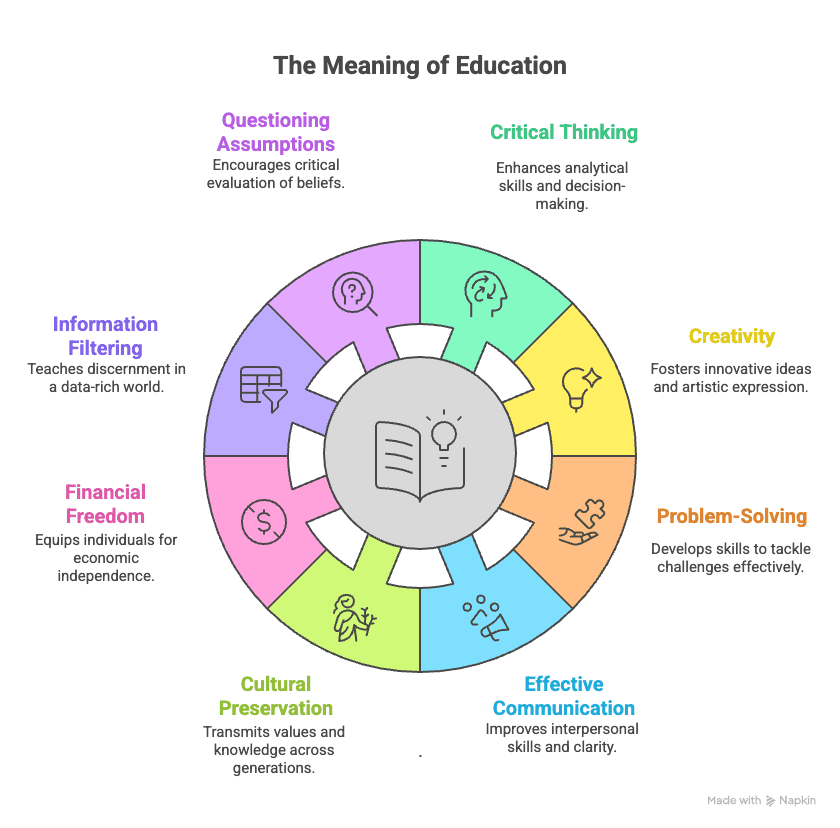
Education, in its widest sense, is the process of acquiring knowledge, skills, values, and attitudes through various means, including formal institutions like schools and universities, as well as informal experiences in daily life.
Education empowers individuals, shapes their worldview, and equips them with the ability to make informed decisions.
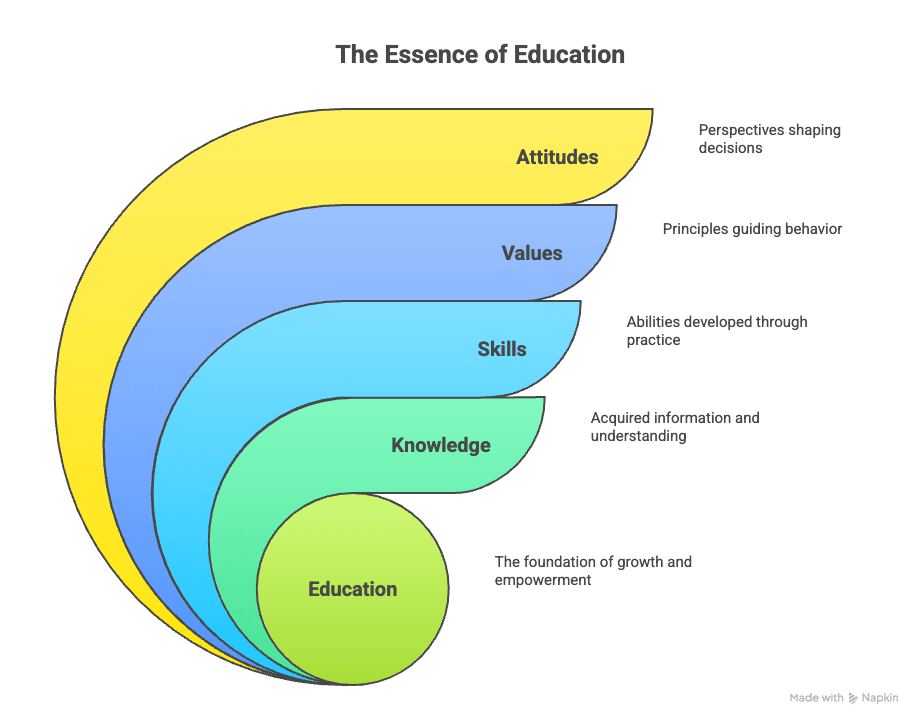
The Meaning of Education
At its core, education is more than just learning facts and figures. It is a lifelong process that cultivates critical thinking, creativity, and problem-solving abilities.
Education enables individuals to understand their environment, communicate effectively, and contribute to the development of society. It helps in the transmission of cultural values and the preservation of knowledge from one generation to another.
Education is about developing the practical application of knowledge and, more importantly, learning how to think. The ability to question, distinguish valuable information from one that is not needed, and creatively applying that selected information for achieving financial freedom and living a fulfilling life.
Education develops the entire brain, encompassing both logical/practical thinking (planning) and creative thinking (creating something from nothing). It aims to make an individual a multi-dimensional person who can think in various directions and is not confined or limited in their thinking
Modern Education as an Information Filter
In the digital age, the definition of an educated mind has fundamentally shifted. We no longer suffer from a scarcity of information; instead, we suffer from an absolute overabundance of it. Therefore, a modern metric of true education is not just what you retain, but your ability to accurately filter out noise to protect your focus.
To build a functional intellect, you must actively separate Actionable Data from the vast ocean of irrelevant online clutter. True education cultivates Critical Thinking, which acts as a shield against biased societal assumptions and media sensationalism. It trains you to look at a trending narrative, pause, and analyze its core substance rather than falling for immediate hype.
Ultimately, this filtering process is driven by Right Questioning. By developing the habit of asking deeper, objective questions, you learn to discard data that does not align with your true purpose in life. Education is the conscious choice of deciding what information you do not need, based completely on what you do not want to become.
Education is deeply connected to right questioning. It involves questioning assumptions, including the very definition of education provided by society or family. This questioning helps one understand what to do in life and, importantly, what one does not want to do.
Types of Education
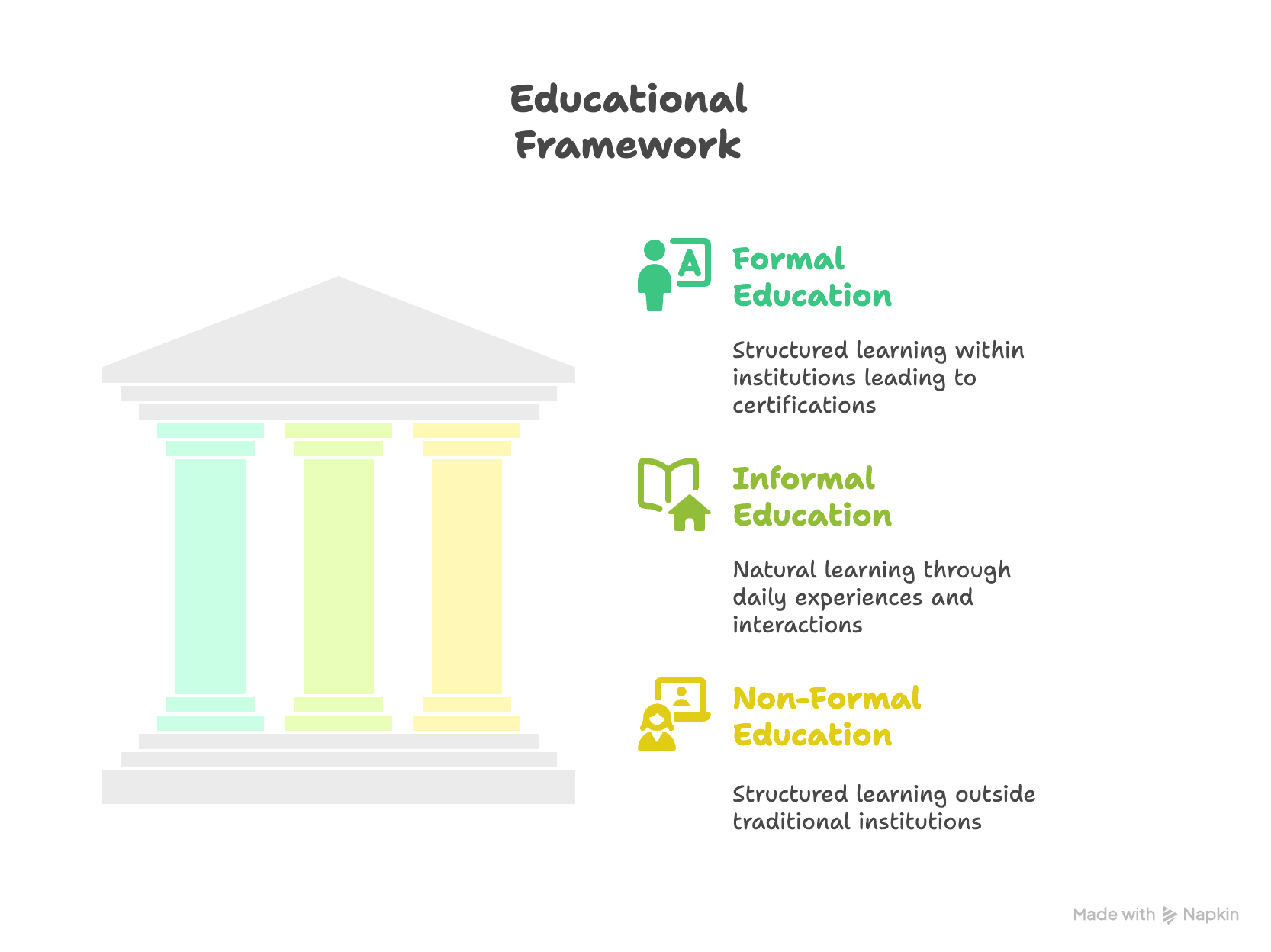
To be more clear, Education can be broadly classified into three types:
1. Formal Education
This is structured and systematic education provided by institutions such as schools, colleges, and universities. It follows a curriculum and leads to certifications or degrees. Examples include:
- Primary and secondary schooling
- Higher education (college and university)
- Professional training programs
2. Informal Education
This type of education happens naturally through experiences and interactions in daily life. It is not structured or institution-based. Examples include:
- Learning from family and peers
- Self-study through books, online resources, or exploration
- Learning life skills from real-world experiences
3. Non-Formal Education
This is education that occurs outside the formal school system but still follows a structured format. It is often flexible and goal-oriented. Examples include:
- Online courses and workshops
- Skill development programs
- Adult literacy programs
The Importance of Education or Why to get educated?
1. Personal Growth
Education enhances knowledge, improves communication skills, and develops self-discipline. It helps individuals achieve their potential and leads to self-improvement.
2. Career Opportunities
A good education opens doors to better job opportunities and economic stability. Skilled individuals contribute to industries and drive economic growth.
3. Social Development
Education plays a key role in reducing inequalities, promoting gender equality, and building an informed and responsible society. It teaches moral values, civic responsibility, and cultural awareness.
4. Technological and Scientific Progress
Scientific discoveries, medical advancements, and technological innovations are all results of education. Educated individuals contribute to research and development, improving the quality of life.
5. Empowerment and Independence
Education empowers people by giving them the ability to think independently, make decisions, and challenge societal norms. It promotes self-reliance and reduces dependency on others.
Conclusion
Education is a powerful tool that transforms lives and societies. It is not just about academic achievement but also about nurturing creativity, ethical values, and life skills. Whether formal, informal, or non-formal, education is essential for personal growth, economic progress, and social harmony.
Investing in education is the key to a better future for individuals and the world as a whole.