
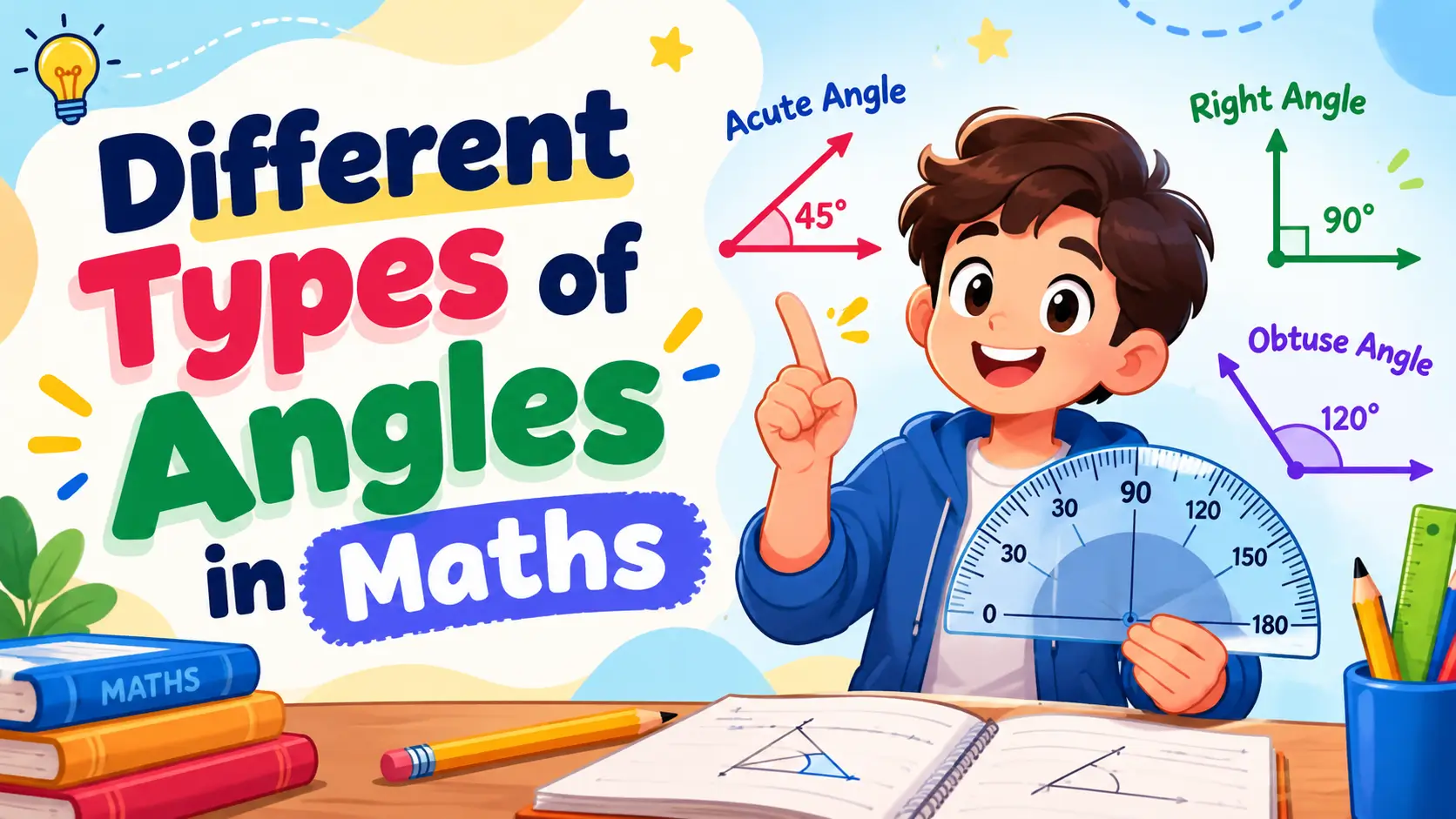

Depending upon position of initial ray and terminal ray, angles can be classified. In this article, angles relevant to class 6 level are discussed. Let us explore them !
Table of Contents
Zero Angle
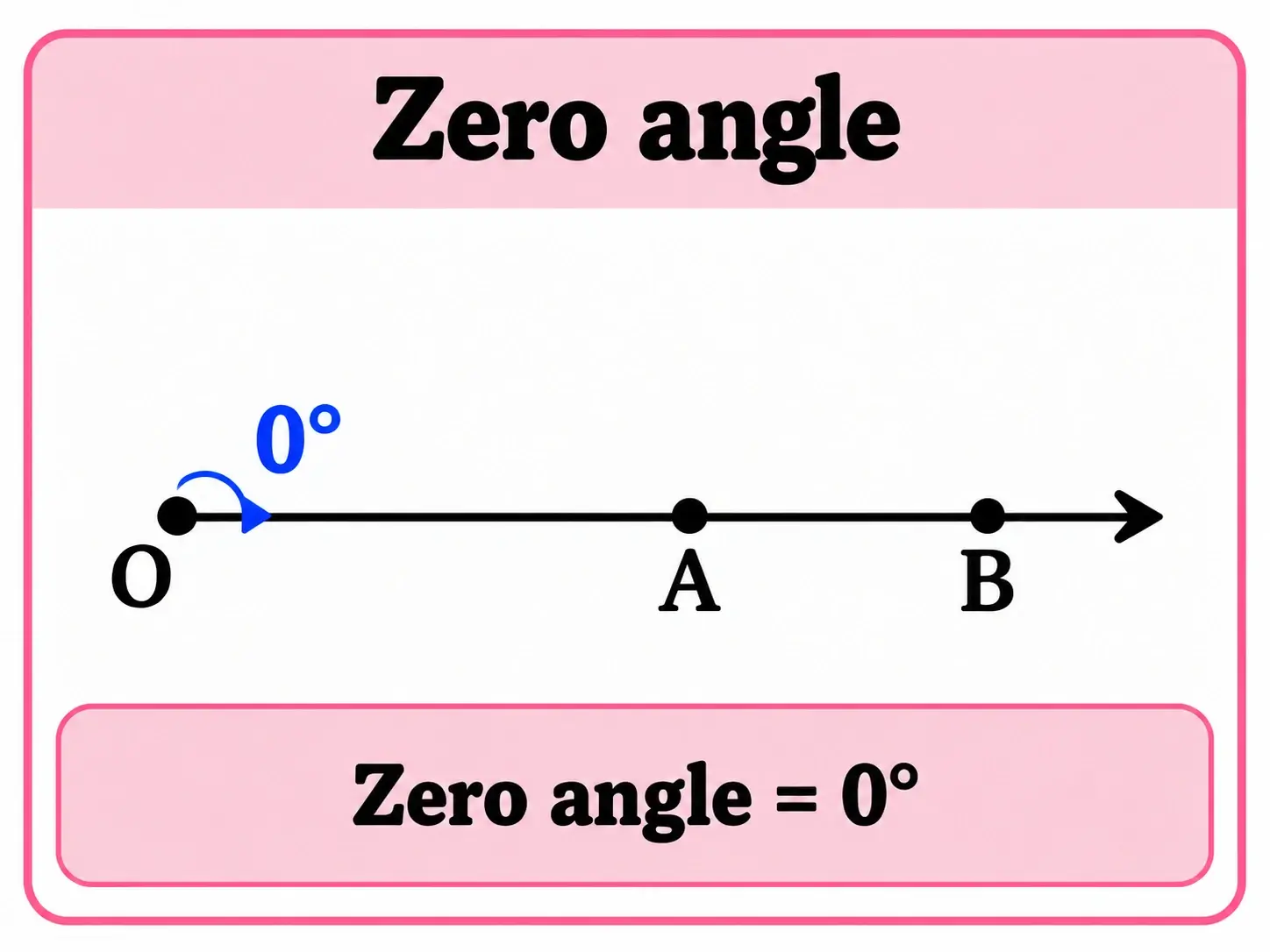
If terminal position of ray coincides with its initial position without making any rotation the angle formed is 0°.
Acute Angle
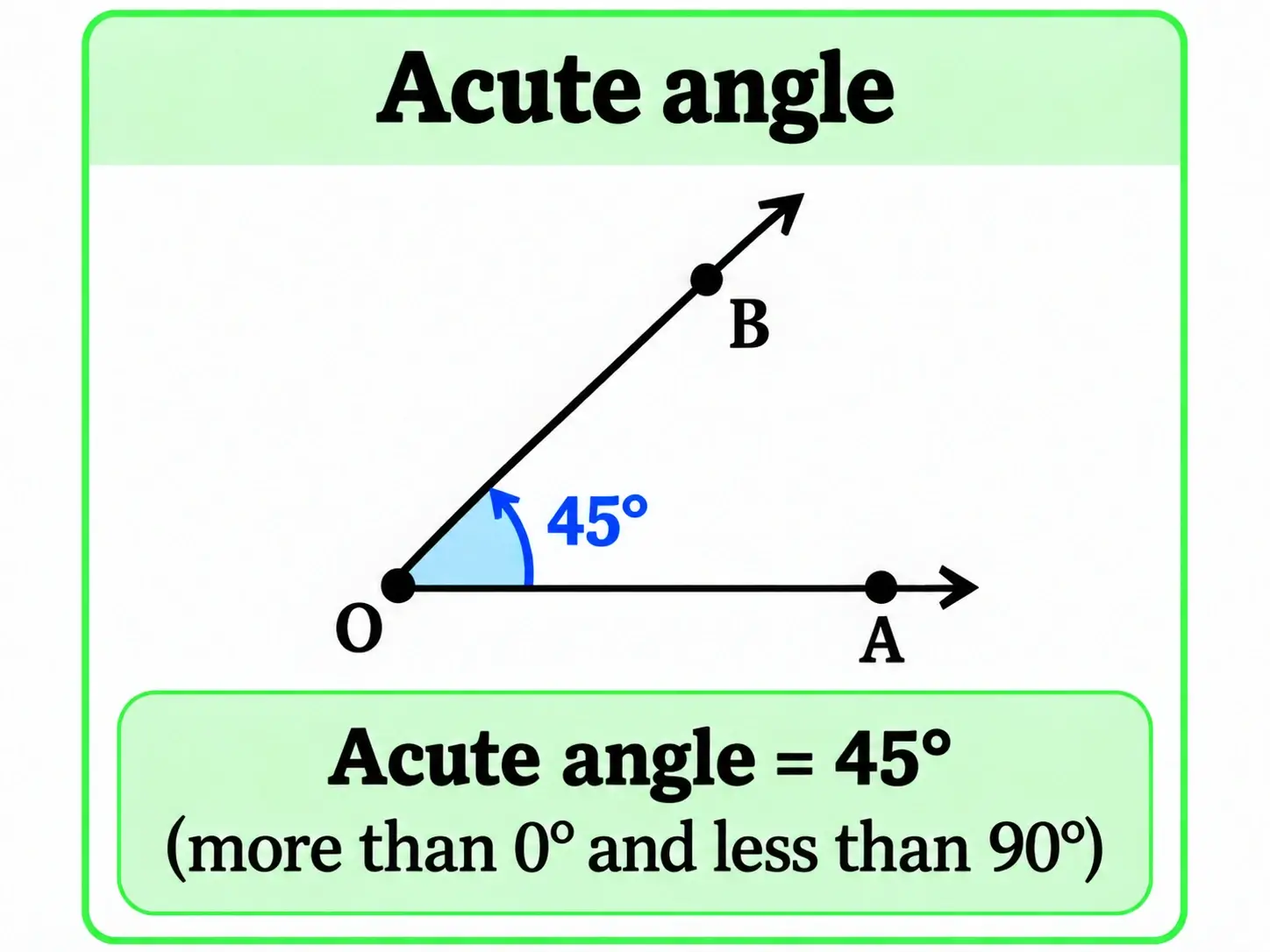
An angle measuring more than 0° and less than 90° is called an acute angle. An acute angle can be imagined to be formed when a ray at initial horizontal position rotates anticlockwise to less than 90°. Examples of acute angles are 30°, 45°, 80°.
Right Angle
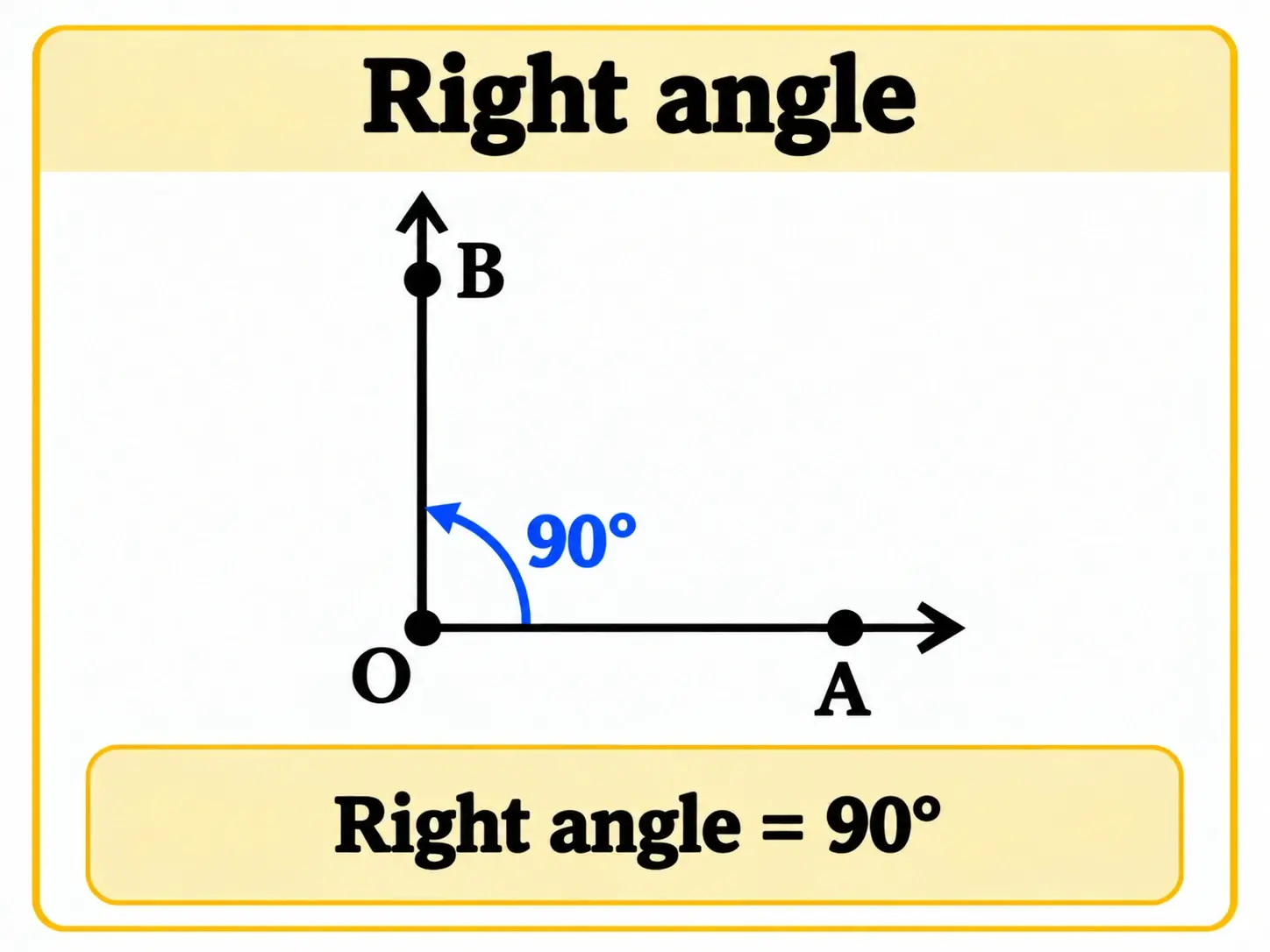
If the initial and terminal positions of rays are perpendicular to each other, then angle formed is right angle.
It means when the initial ray is rotated on quarter of revolution we get right angle of 90° as of 360° gives 90°.
Obtuse Angle
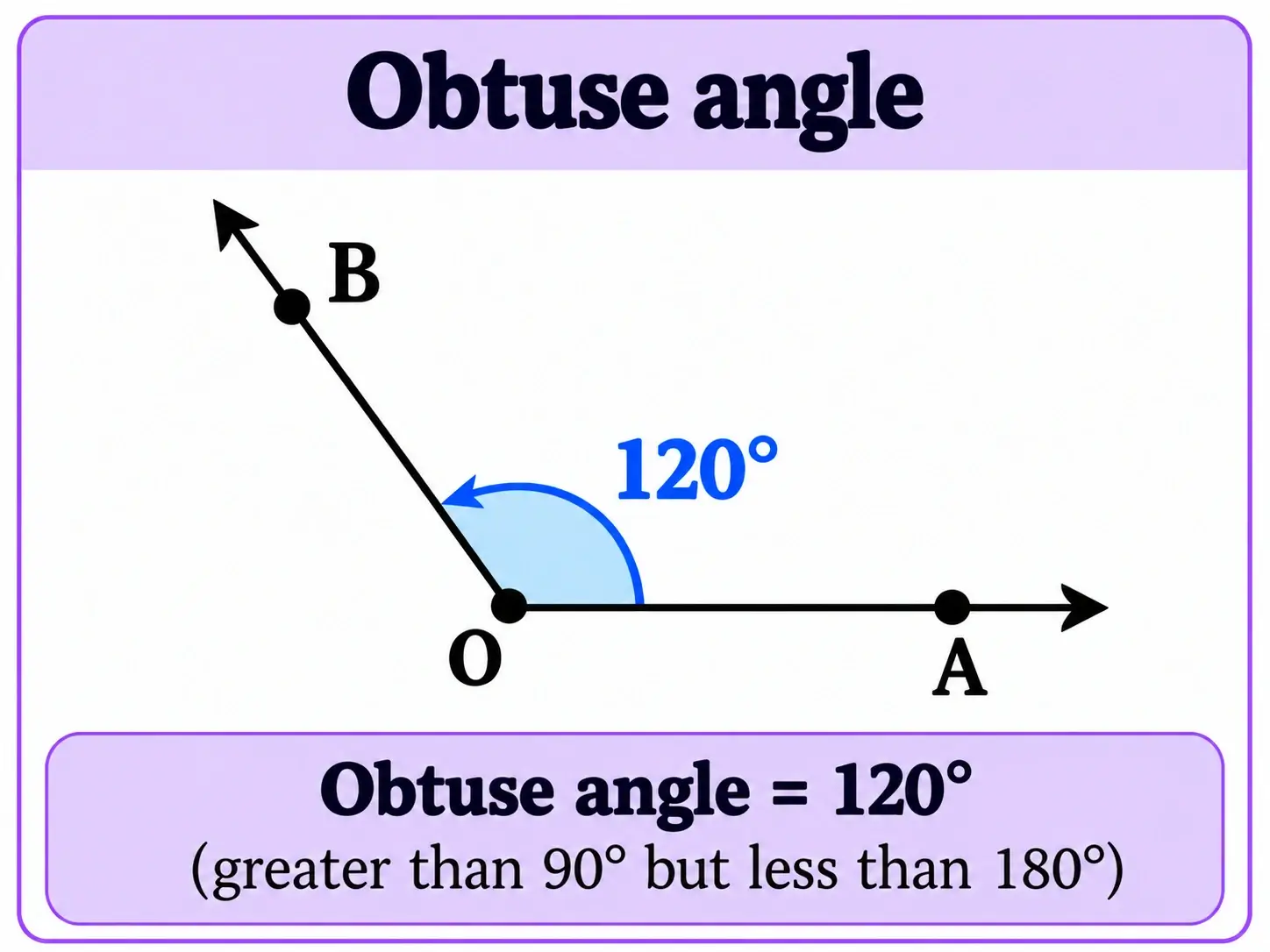
An angle measuring more than 90° and less than 180° is called an obtuse angle. An obtuse angle is formed when a ray at initial position of 90° rotates anticlockwise to less than 180°. Examples of obtuse angles are 120°, 175°.
Straight Angle
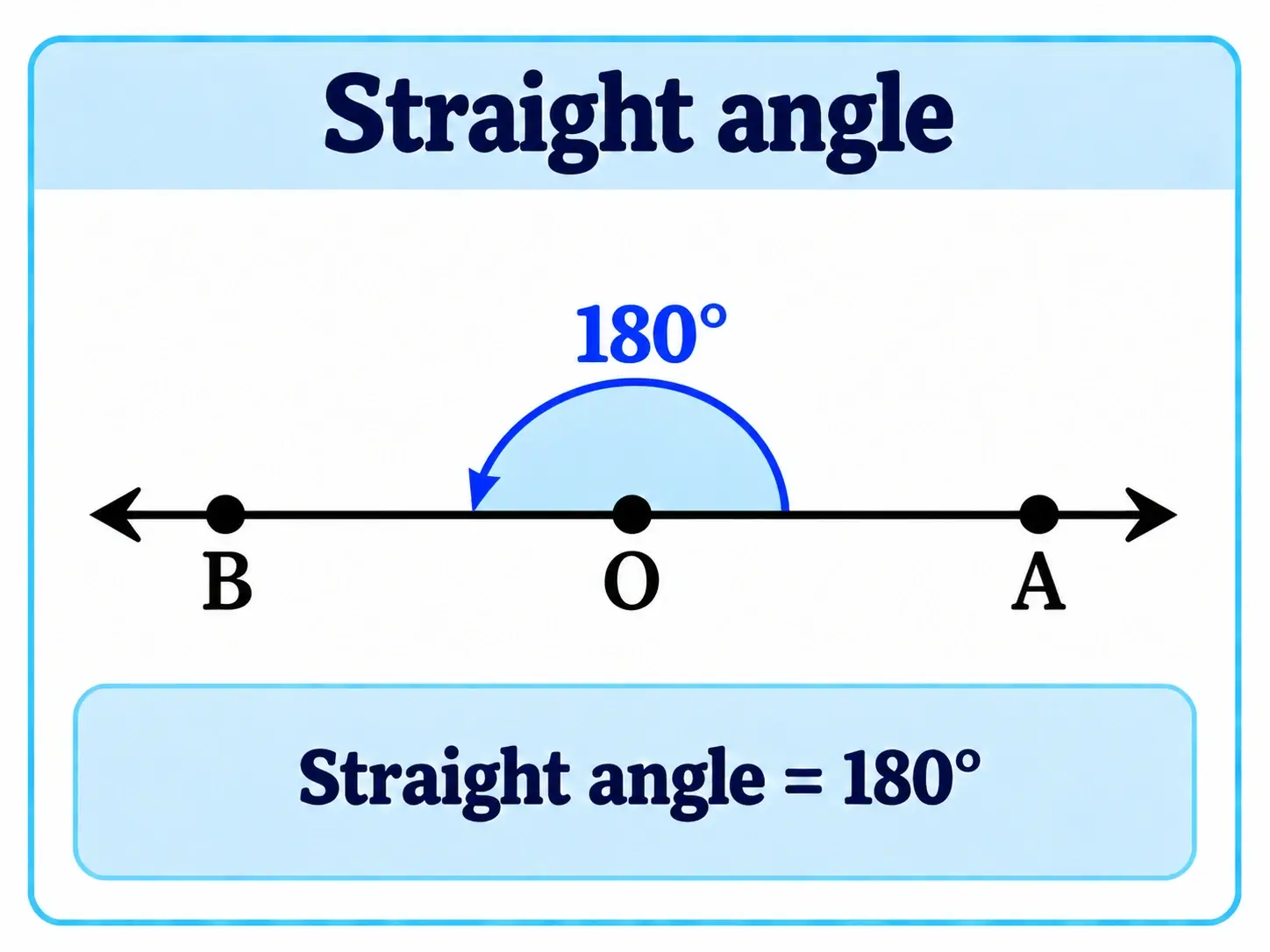
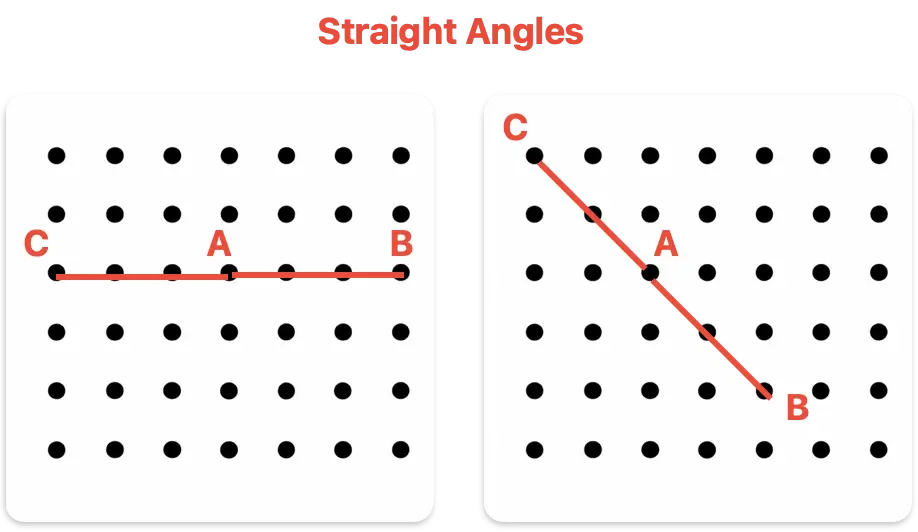
If the initial and terminal positions of rays are opposite to each other, then angle formed is straight angle as they lie on a line
It means when the initial ray is rotated on half of a revolution we get right angle of 180° as of 360° gives 180°.
Reflex Angle
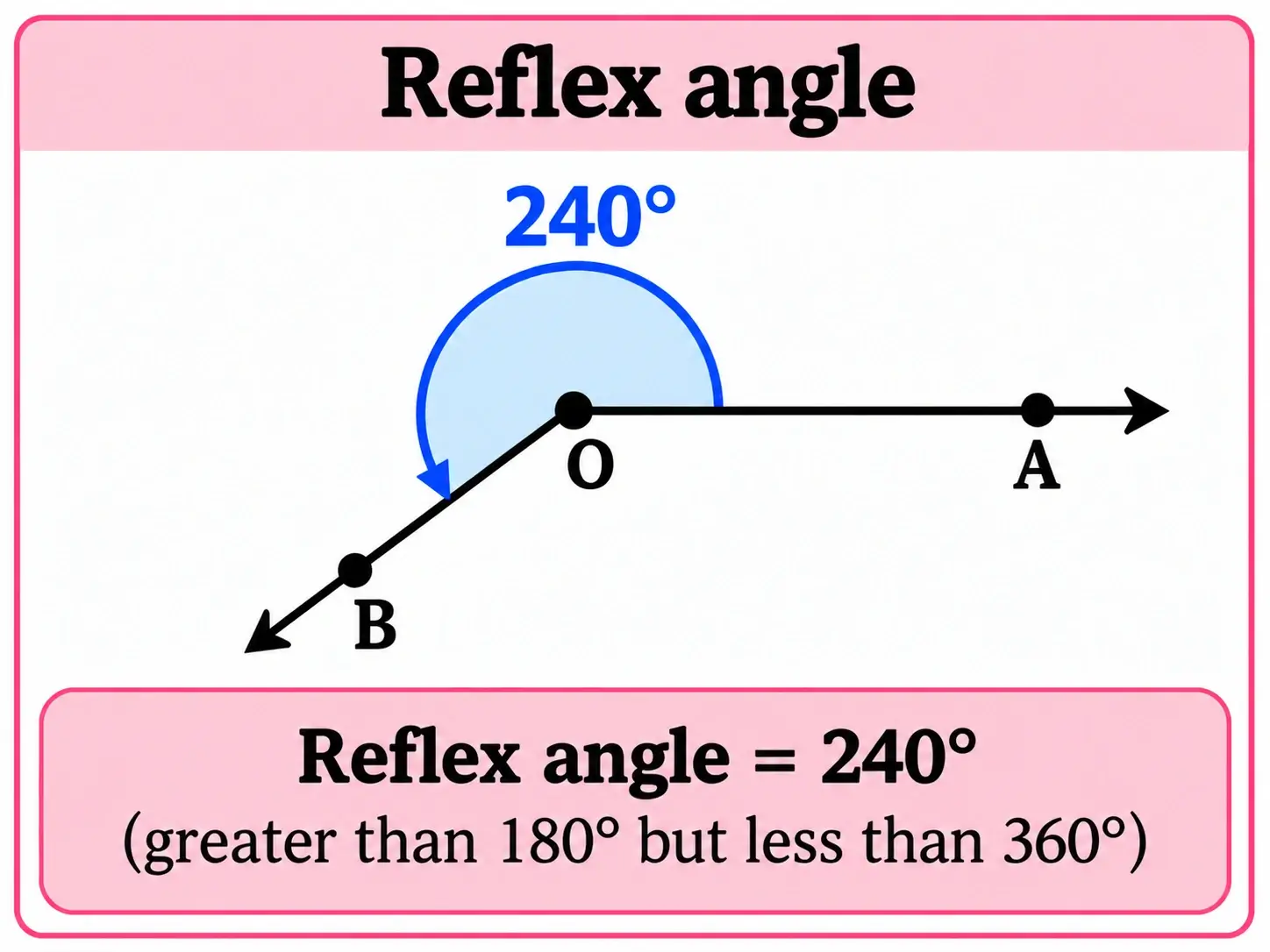
An angle measuring more than 180° and less than 360° is called an reflex angle. An obtuse angle is formed when a ray at initial position of 180° rotates anticlockwise to less than 360°. Examples of reflex angles are 220°, 330°.
Complete Angle
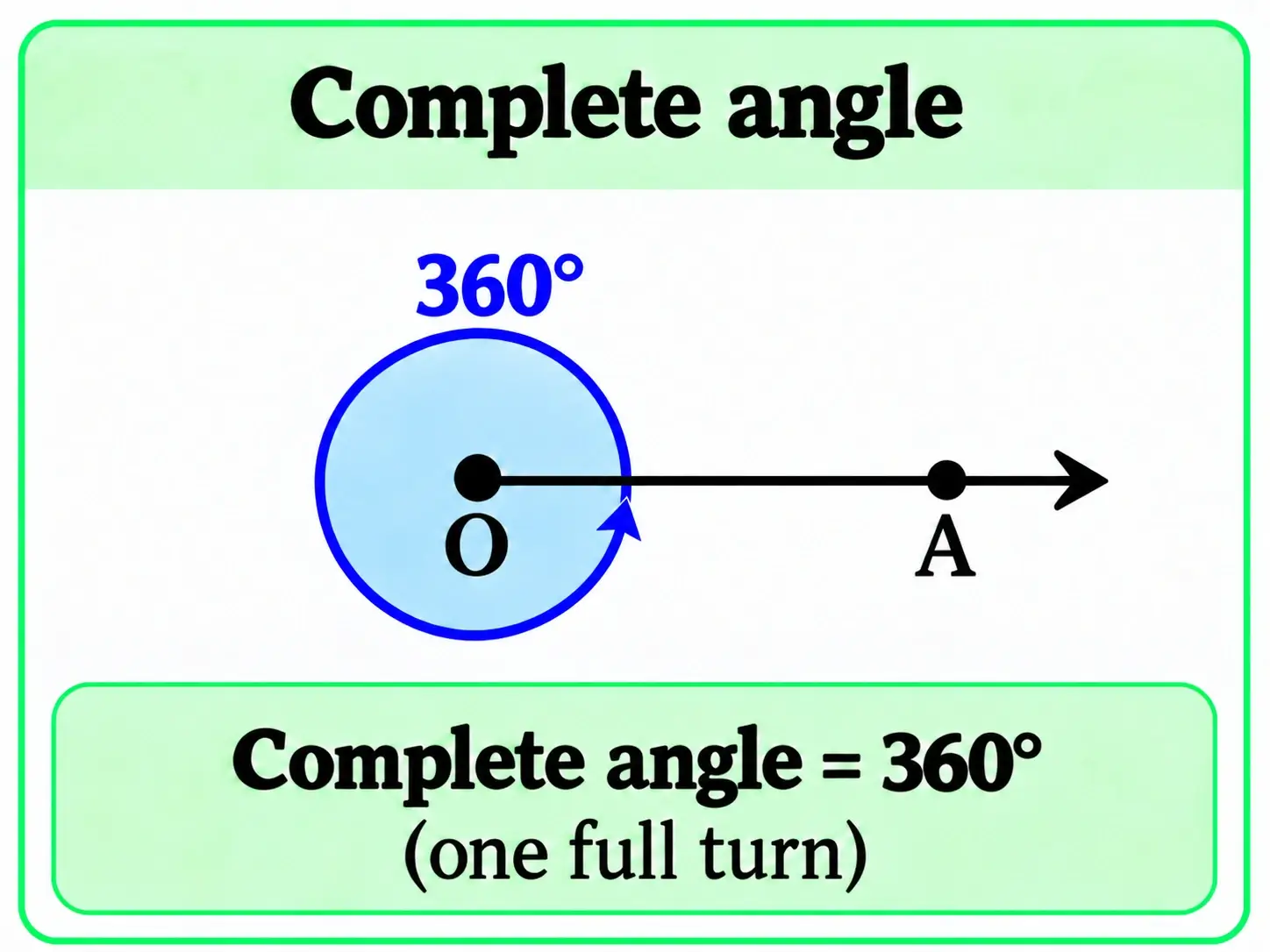
When terminal ray makes one complete revolution and finally coincides with initial ray then angle formed is a complete angle which is of 360°
Video for understanding different types of angles
Watch the animated below video to understand angles types we discussed earlier
Complementary and Supplementary Angles
If sum of measures of two angles is 90°, then these angles are said to be complementary angles. For example, if angle A is 70° and angle B is 20°, since their sum is 90°, they are complementary angles
If sum of measures of two angles is 180°, then these angles are said to be supplementary angles. For example, if angle A is 150° and angle B is 30°, since their sum is 180°, they are supplementary angles
Applet to Understand Different Types of Angles
Explore and interact with the below applet to understand about the different types of angles we discussed
Explore Types of Angles
Drag the black point B along the circle or move the slider. Observe how the angle and its name change.
Quick Check
What type of angle is 120°?
Solved Ncert Figure it Out Questions
Below are solved Ncert figure it out questions given on pages 29 and 31
Questions and Answers Page 29
- How many right angles do the windows of your classroom contain? Do you see other right angles in your classroom?
Answer 1. A window maybe square or rectangle, irrespective of shape, it will usually contain 4 right angles. Yes, if we see the blackboard it will contain 4 right angles.
2. Join A to other grid points in the figure by a straight line to get a straight angle. What are all the different ways of doing it?
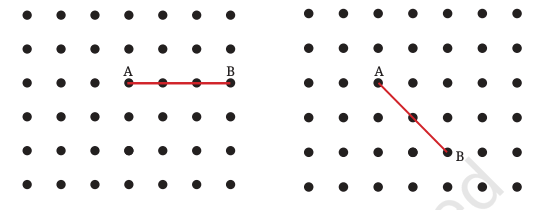
Answer 2. Other ways are given in below image:
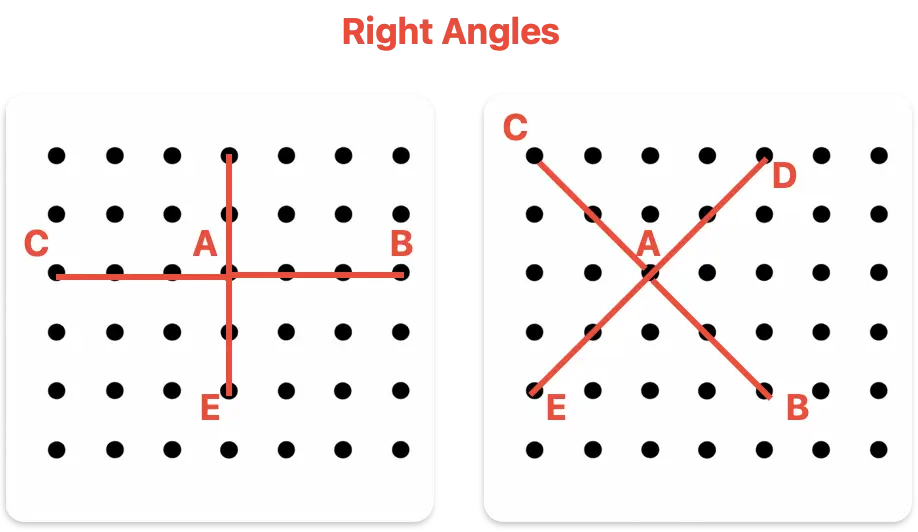
3. Now join A to other grid points in the figure by a straight line to get a right angle. What are all the different ways of doing it?
Answer 3. Other ways are given in below image:
4. Get a slanting crease on the paper. Now, try to get another crease that is perpendicular to the slanting crease.
a. How many right angles do you have now? Justify why the angles are exact right angles.
b. Describe how you folded the paper so that any other person who doesn’t know the process can simply follow your
description to get the right angle.
Answer 4. (a) You get 4 right angles. When the two creases cross, the second crease is perpendicular to the first one. Folding makes the two adjacent angles equal. Since together they form a straight angle of ,
So all four angles are exactly 90°
b)
- First, fold the paper in any direction to make a slanting crease and unfold it.
- Fold the paper again so that one part of the slanting crease lies exactly over the other part.
- Press the fold firmly to make the second crease.
- Unfold the paper.
The new crease will be perpendicular to the slanting crease, giving four right angles at their intersection.
Questions and Answers Page 31
1. Make a few acute angles and a few obtuse angles. Draw them in different orientations.
Answer 1.
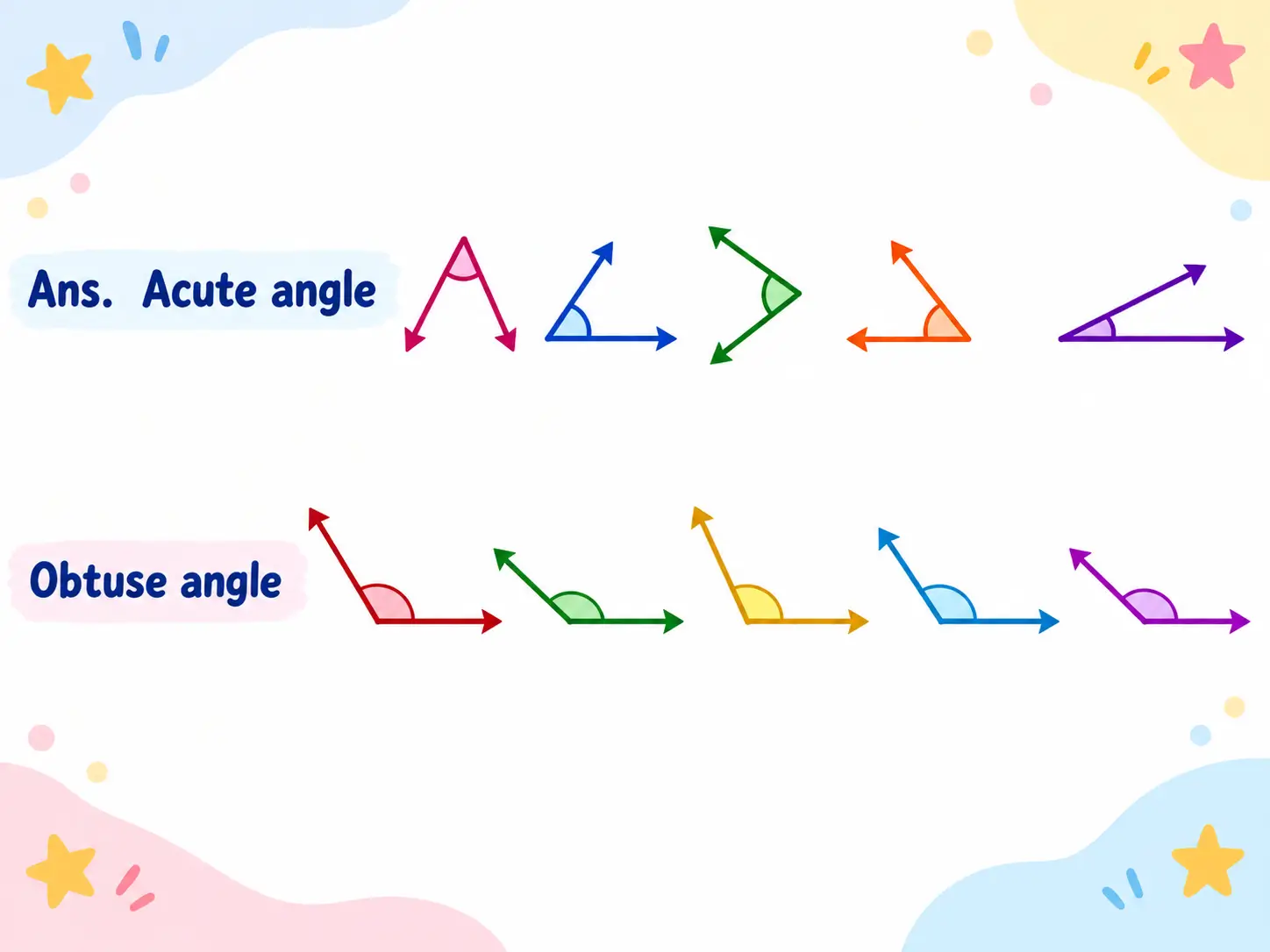
2. Do you know what the words acute and obtuse mean? Acute means sharp and obtuse means blunt. Why do you think these words have been chosen?
Answer 2. These words have been chosen because in acute angles, the opening of arms is less than that of obtuse angles. We can say acute angles are sharper than obtuse angles which are blunt or more open.
3. Find out the number of acute angles in each of the figures below. What will be the next figure and how many acute angles will it have? Do you notice any pattern in the numbers?
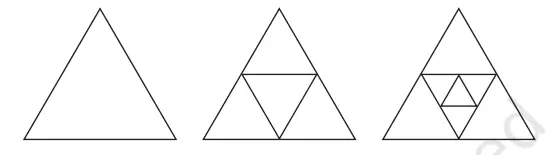
Answer 3. In first figure number of acute angles are 3, in second 3 + 9 = 12, in third 12 + 9 = 21
Next figure will include an inverted triangle inside third figure small triangle and will have 21 + 9 = 30 acute angles
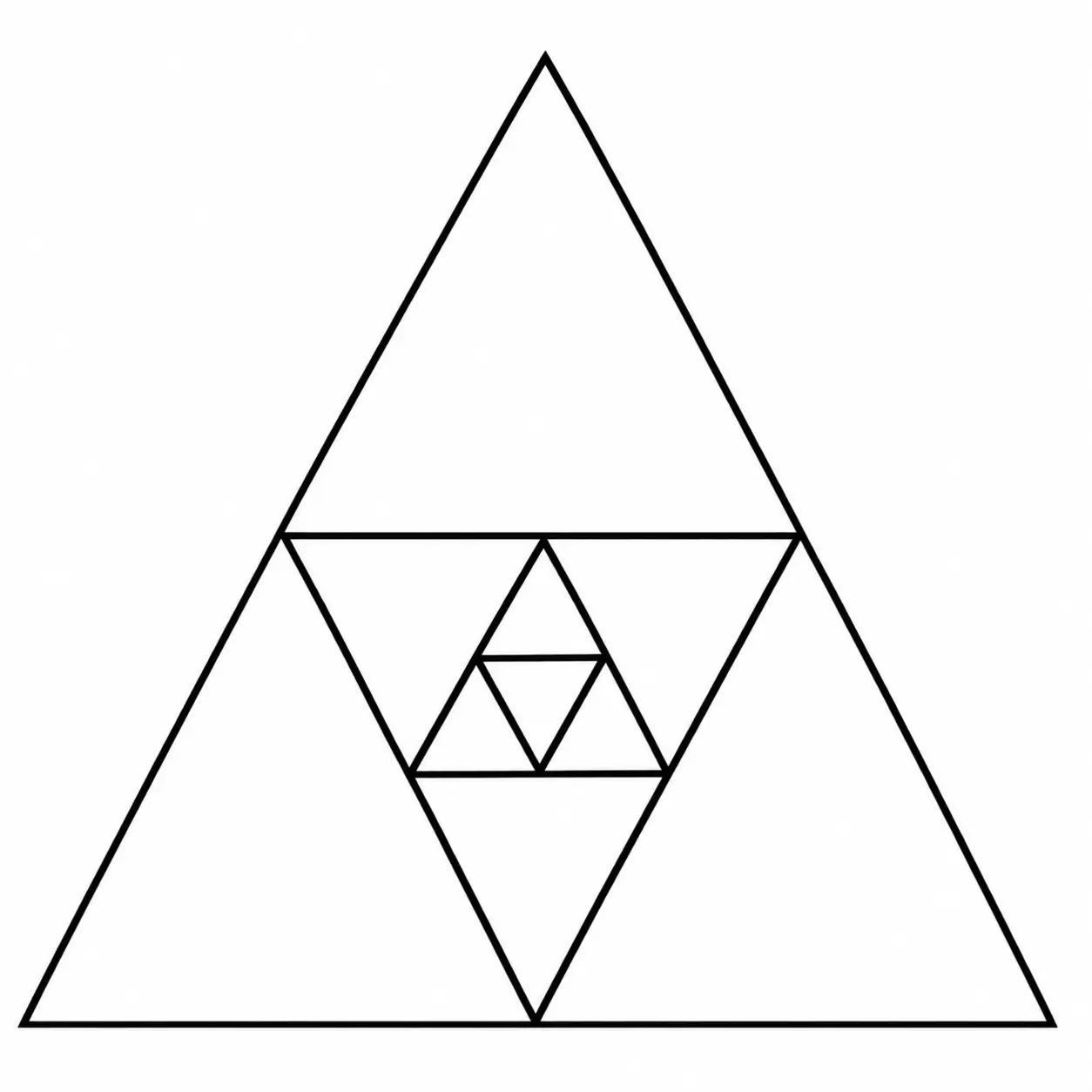
The pattern is 3n+1 , where n is the number of times a triangle has been subdivided or number of stages inside the triangle