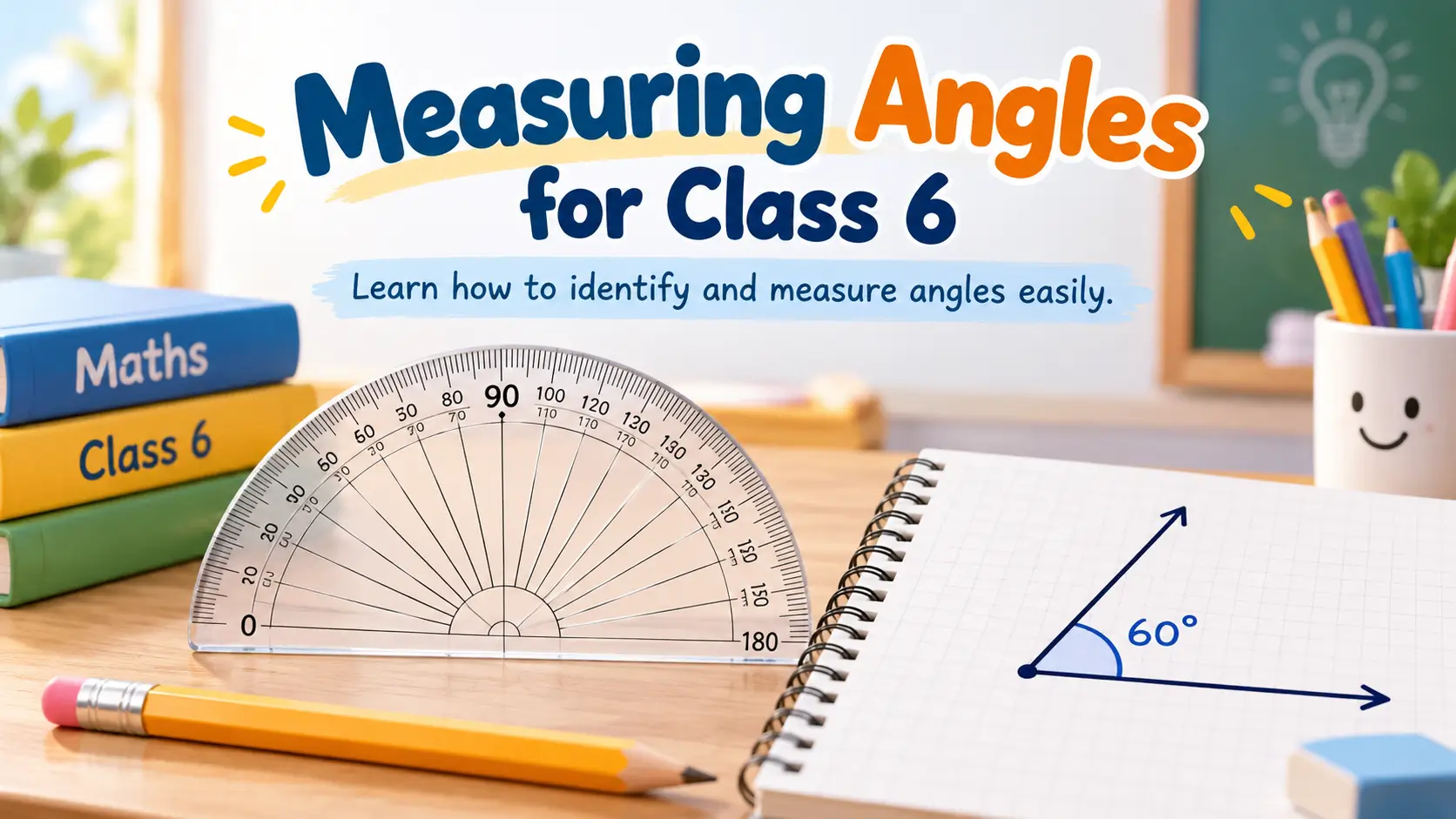

What if we want to measure the exact quantity of angles in numbers without comparing it to another angle? The angles can be measured by tool called protractor about which we will study in this article in detail.
Table of Contents
Measuring Angles without Protractor
A full revolution is divided into 360° as 360 is the smallest number that can be evenly divided by all numbers up to 10 except number 7.
That means we can break up a circle into 1, 2, 3, 4, 5, 6, 8, 9 or 10 equal parts, and still have a whole number of degrees in each part. This way we don’t need a protractor to measure the angles.
Consider the image below:
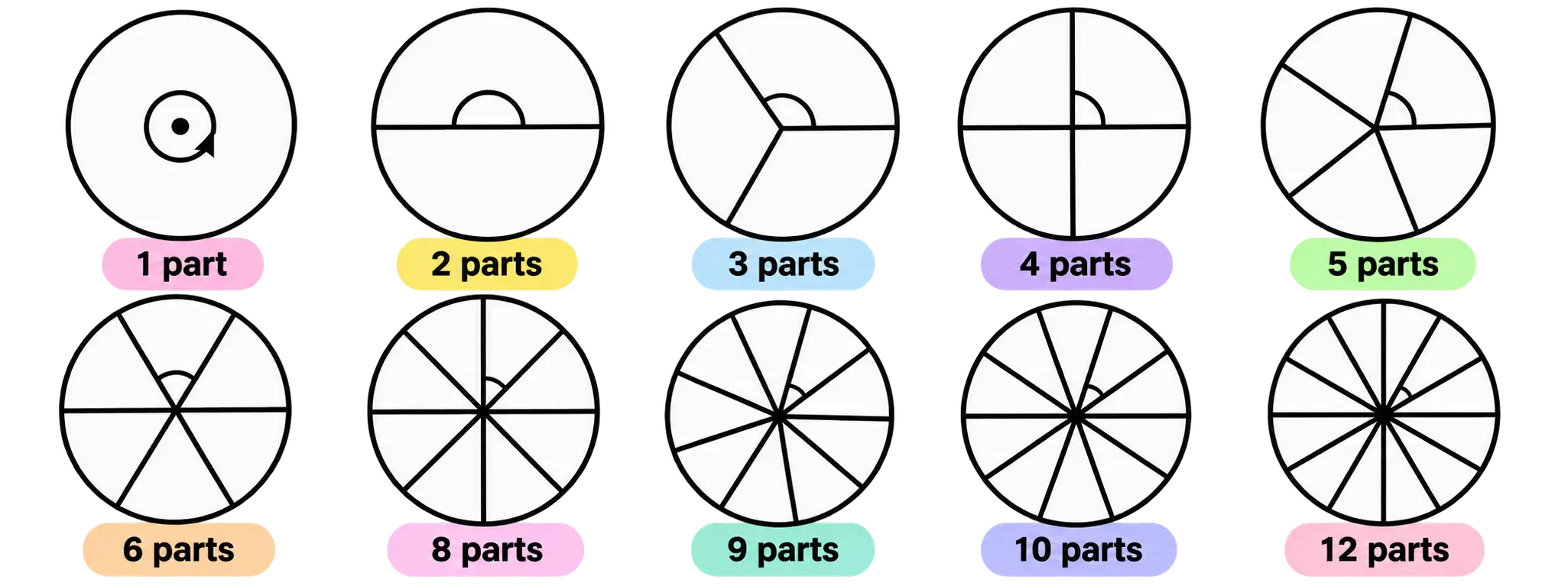
1 part or a circle has 1 full revolution of 360°, consecutively, when circle is divided into 2 parts each angle measures 180°, 3 parts each angle 120°, 4 parts each angle 90°, 5 parts 72°, 6 parts each angle 60°, 8 parts each angle 45°, 9 parts each angle 40° , 10 parts each angle 36°, 12 parts each angle 30°
We are able to measure like this without protractor as circle is being divided into whole number of degrees in each part.
But what if we want to measure other angles? Let’s find out in next section !
Measuring Angles with Protractor
A protractor is a tool, a geometrical instrument which is used for measuring and constructing angles. The curved edge of protractor is divided into 180 equal parts and each part is equal to a degree. It has inner scale and outer scale. The inner scale from right to left is marked from 0 to 180 degrees and is used to measure angles opening to the right while the outer scale from left to right is marked from 0 to 180 degrees and is used to measure angles opening to the left. The protractor has a base line joining the two zeros of inner scale and outer scale and the midpoint of base line is named as centre of the protractor.
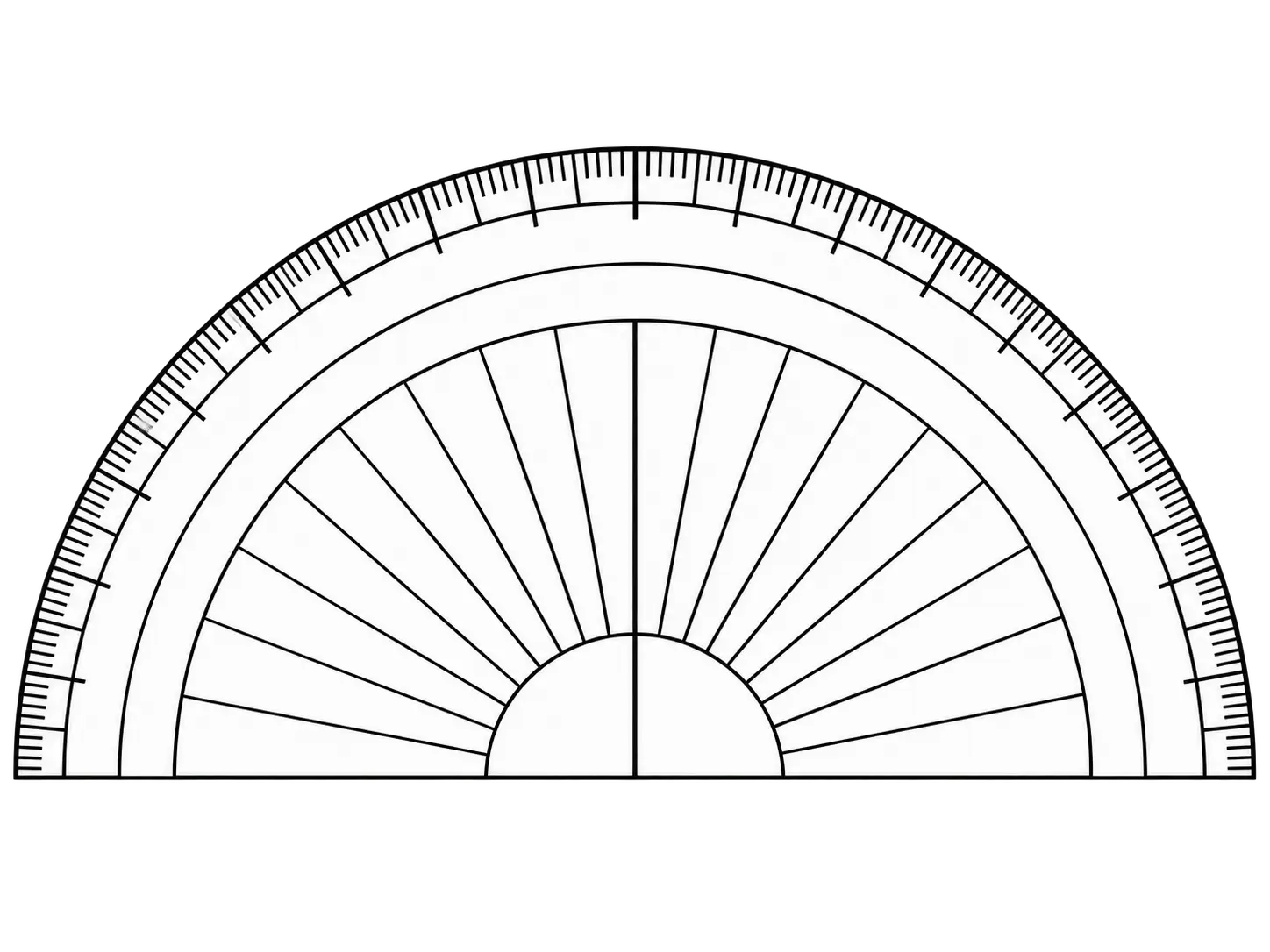
Unlabelled Protractor
This is a protractor which is not labelled means it is without numbers written on it. Straight angle is divided into 180 units of 1 degree. Starting from extreme right point of the base, medium mark is there after every 5° and long mark is there after every 10°.
Labelled Protractor
This is a protractor with labels of numbers on it which makes it easier to identify or read the angles.
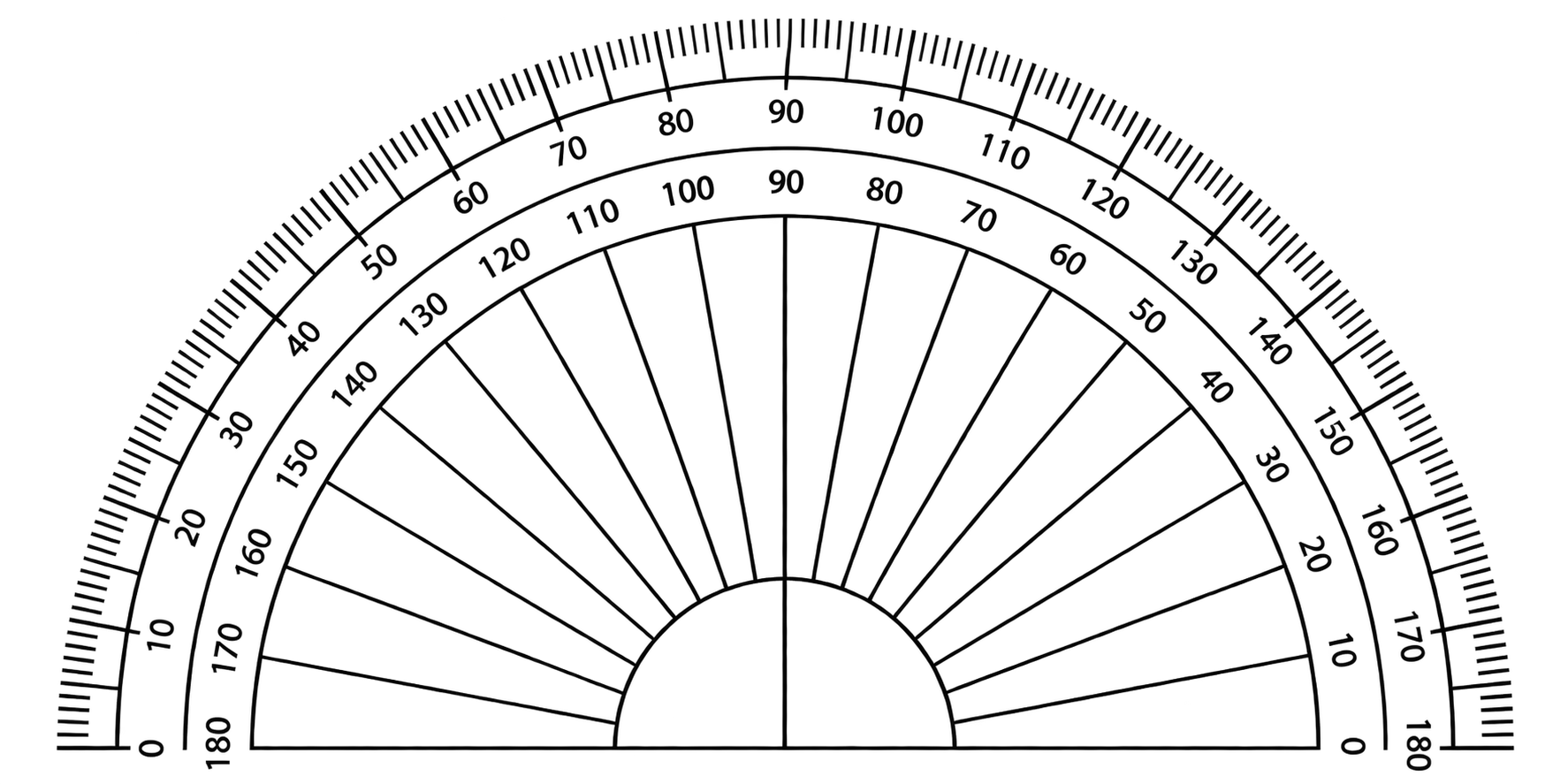
How to measure an angle by a protractor?
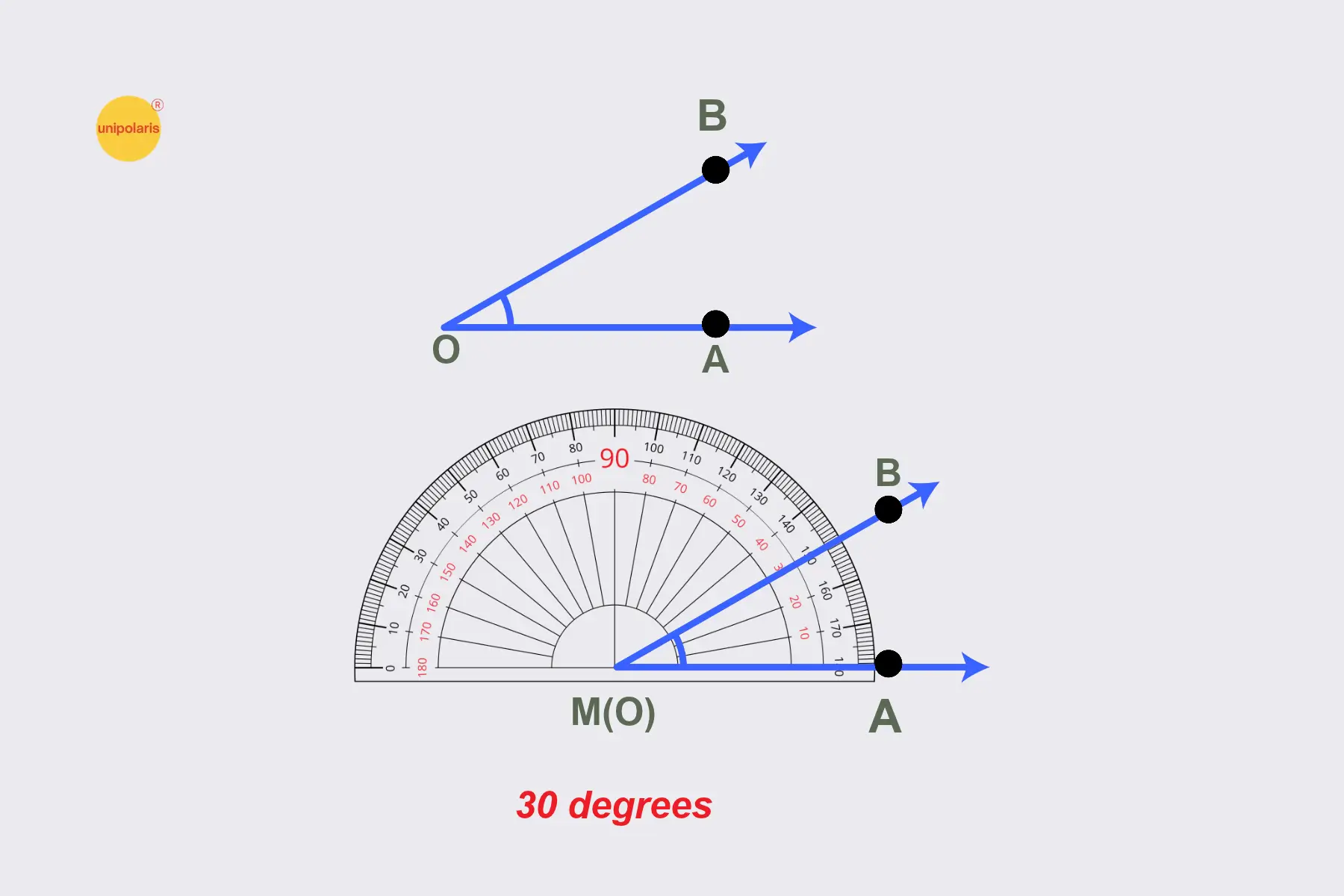
Suppose we would like to measure ∠AOB given in below image using a protractor.
- Place the protractor on the angle such that its midpoint M lies exactly on vertex O
- Next, we adjust protractor such that its base line is on ray OA
- Then we check degree marked along OB on inner curved edge of protractor
- We find by observation that ∠AOB is 30°